Key points
- Five military-owned companies are being restructured ahead of EGX listings, with counsel from ADSERO (Ragy Soliman & Partners) and Matouk Bassiouny & Hennawy.
- EFG Hermes and CI Capital are financial advisers; Boston Consulting Group advises commercially; PwC and Grant Thornton on tax and accounting.
- The Sovereign Fund of Egypt is reviewing an expansion of the programme to 40 to 60 state-run companies.
- Egypt’s first SPAC launched with Matouk Bassiouny & Hennawy as counsel; the Bonyan IPO listed on the EGX.
The programme, as reported
Egypt is restructuring five military-owned companies ahead of public offerings on the Egyptian Exchange, with a timetable running through 2026. The reported adviser set is unusually complete:
| Role | Adviser |
|---|---|
| Financial advisers | EFG Hermes, CI Capital |
| Commercial and strategic adviser | Boston Consulting Group |
| Legal counsel | ADSERO (Ragy Soliman & Partners) and Matouk Bassiouny & Hennawy |
| Tax and accounting | PwC, Grant Thornton |
Separately, the Sovereign Fund of Egypt has conducted a comprehensive review of the privatisation programme that could expand it to 40–60 state-run companies. The stated intention is to transfer all state-owned companies to the Fund to improve returns, beginning with 370 profitable firms, more than half of the 709 the state owns.
Why the legal queue is longer than the listing queue
Meridian’s interest here is not the listings themselves. It is the restructuring work that precedes them, which is several times larger and much less visible.
Get the next Meridian Briefing. Every Thursday at 11:00 WAT.
Taking a state-owned enterprise to a public market requires, at minimum:
- Corporate restructuring: separating commercial operations from social and subsidy functions, which is the genuinely difficult part for a military-owned enterprise
- Asset and land title regularisation: often the single largest workstream, because state entities frequently operate on land whose title is undocumented
- Employment and pension liability restructuring, including legacy entitlements and any re-employment guarantees
- Financial statement reconstruction to a listing standard, across multiple years
- Regulatory sequencing across the Financial Regulatory Authority, the Egyptian Exchange and, in many cases, sector regulators
- Disclosure construction where a state entity has never produced public financial information
That is not one transaction. It is a multi-year programme of interrelated mandates, and the firms appointed now hold the templates.
The lead indicator Meridian is using
Two data points tell us the Egyptian market is being prepared, not improvised.
Egypt’s first SPAC. Matouk Bassiouny & Hennawy advised Catalyst Partners on the launch of the first SPAC in Egypt. A SPAC is a purely regulatory creature; it exists only because a regulator permitted it. Getting one approved requires a relationship with the Financial Regulatory Authority that cannot be acquired quickly.
Bonyan for Development and Trade’s IPO. The same firm advised on the IPO and listing on the EGX under the ticker BONY.CA. A real-estate investment company going public in Egypt is exactly the profile of the listing queue the Fund is preparing.
Where the rest of the Egyptian mandate flow sits
Egyptian legal work is not only privatisation. Meridian has identified four other Egyptian mandates that show the shape of the market:
- Telecom Egypt’s Regional Data Hub: majority stake acquired by Helios Investment Partners, with Egyptian counsel on the transaction. Digital infrastructure is becoming Egypt’s fastest-growing M&A vertical.
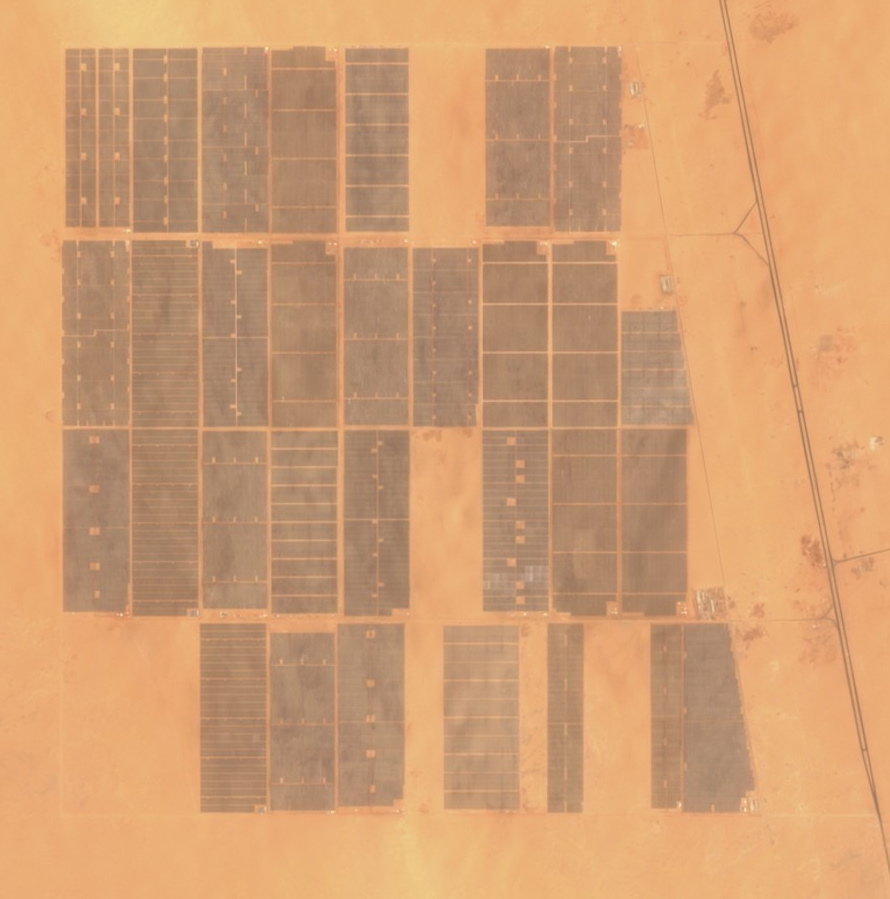
- Scatec and the National Bank of Egypt: a shareholder agreement giving the bank 20% equity in the 1.1GW Obelisk hybrid solar-and-battery project. Gigawatt-scale hybrid with a state bank as equity partner is the structure that will define North African renewables.
- Al Baraka Bank Egypt’s mandatory tender offer for Al Tawfeek Leasing: up to 90% of listed shares, structured entirely as a share swap with no cash alternative, approved by the FRA and run on the EGX over twenty working days. All-scrip MTOs are technically fragile and rare.
- Vitabiotics’ sale to Bain Capital: Egyptian counsel carved out as a discrete workstream while the platform transaction ran offshore.
Read together, these describe a market where the demand for Egyptian legal capability is broadening across sectors, while the supply of firms able to execute FRA-facing capital-markets work is still concentrated.
Meridian’s forecast, stated so it can be checked
Meridian expects, over the next four quarters:
- At least two further Egyptian state-entity listings to be announced with named counsel.
- Restructuring appointments to exceed listing appointments by a factor of at least three, the ratio that makes the pipeline real rather than aspirational.
- Continued partner-level hiring in Egyptian finance practices, following the pattern already visible at Matouk Bassiouny & Hennawy.
- No significant entry by international firms into the Egyptian domestic market: the work is FRA-facing, Arabic-language and relationship-driven, which is precisely the combination that resists offshore competition.
We will publish each prediction against its outcome, in the Briefing.
Related on Meridian
- Francophone Africa is the biggest unclaimed coverage gap in the African legal market
- Data centres are becoming Africa’s fastest-emerging M&A vertical, and the legal work is different
- Five counsel, three continents, one transaction: the Canal+ / MultiChoice panel is the new normal
- Egypt’s first SPAC (Catalyst Partners)
- Bonyan IPO and EGX listing
- Al Baraka Bank Egypt mandatory tender offer for A.T. Lease
- Vitabiotics sale to Bain Capital (Egyptian counsel)
- MNT-Halan sets out a 20% EGX float


Leave a Reply