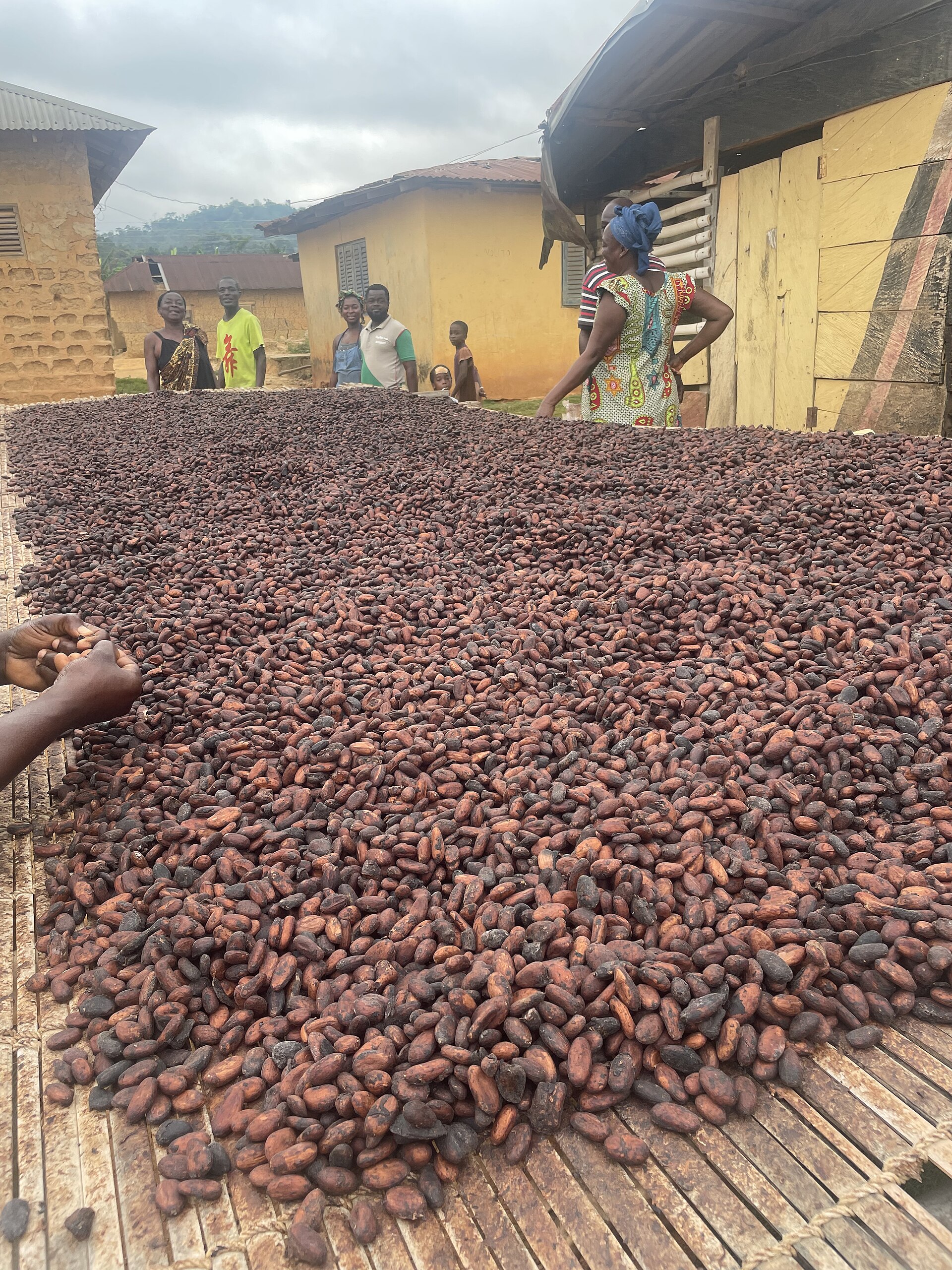
President John Mahama signed the Ghana Cocoa Board Act, 2026 into law on 26 August 2026 as one of ten bills assented to that day, the Presidency announced. The Presidency said the Act mandates local processing of 50% of cocoa beans and guarantees farmers 70% of world market prices. Parliament passed the bill on 31 July.
Key provisions
Pulse Ghana’s summary of the bill as passed sets out its main features. All cocoa farms are designated protected land, and conversion to other uses without government approval carries up to 20 years’ imprisonment. Illegal mining on cocoa land attracts 10 to 20 years’ imprisonment plus financial penalties calculated by reference to trees destroyed. Smuggling carries 5 to 10 years for individuals, and licensed buying companies involved face revocation of their licences.
On pricing, the Act guarantees farmers at least 70% of the gross free-on-board export price and gives the Producer Price Review Committee statutory backing. It creates a Cocoa Farmers Pension Scheme, an educational trust for farmers’ children and a Cocoa Stabilisation and Diversification Fund. For disputes, it establishes a Dispute Resolution Committee and a Cocoa Board Tribunal, with appeals to the High Court.
Opposition objections
The Minority opposed the bill. Rainbow Radio reported on 30 August that Dr Isaac Yaw Opoku, Ranking Member on Parliament’s Agriculture Committee, said the Minority had identified at least eight contentious provisions and that farmer associations and licensed buying companies were bypassed during drafting. He called it deeply unfortunate that the President signed the bill without addressing what he called fundamental defects.
Get the next Meridian Briefing. Every Thursday at 11:00 WAT.
Why it matters
The 50% local processing requirement is the provision with the largest commercial reach. It implies either expanded grindings capacity in Ghana or a reallocation of bean supply away from export contracts, and processors, traders and their financiers will need to see how COCOBOD allocates beans and prices them to local grinders before committing capital. The new tribunal adds a specialist forum for sector disputes, so counsel for licensed buying companies should review dispute resolution clauses in supply and financing agreements to see whether they are consistent with the statutory route. The penalties for converting cocoa land also bear on mining and real estate transactions: title and environmental due diligence in cocoa-growing districts should now confirm whether land is under cocoa cultivation, because a change of use without approval carries criminal exposure. Implementing guidelines from COCOBOD and the relevant ministries will determine how much of this is enforceable in practice.








Leave a Reply