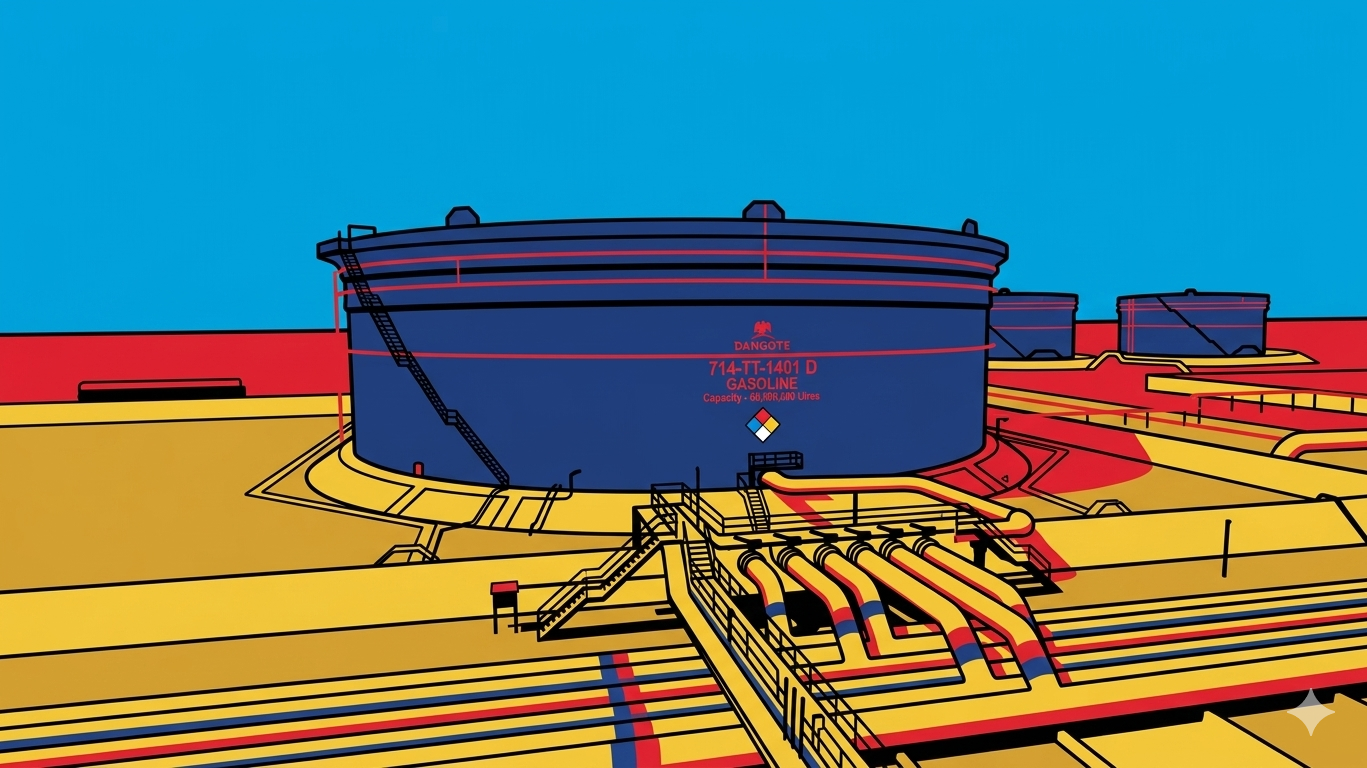
Planned listing places Africa’s largest refinery at the centre of a broader institutional credibility exercise
Nigerian law firms Olaniwun Ajayi, Banwo & Ighodalo and AELEX are advising on the planned initial public offering of Dangote Petroleum Refinery, according to people familiar with the transaction timeline, positioning the firms at the centre of what could become one of the most consequential capital markets exercises in modern African corporate history.
The proposed listing is expected to value the 600,000-barrel-per-day refinery at more than $50 billion, with approximately 10% of the company expected to be offered to public investors beginning in June. The company reportedly submitted its prospectus to regulators in April and has already disclosed financial advisers and clearing agents, though its legal advisers have not yet been formally announced.
The significance of the transaction extends well beyond valuation. The offering represents a critical institutional test for Nigeria’s capital markets and their ability to intermediate infrastructure-scale industrial capital at a level typically associated with larger global exchanges.
For years, African capital markets have struggled to attract listings of strategic industrial assets at meaningful scale. Many of the continent’s largest companies have remained privately held, state-controlled or externally financed through offshore structures and foreign exchanges. Dangote Refinery’s proposed listing introduces a different proposition: whether a domestically anchored exchange can support a globally material industrial business while meeting rising expectations around transparency, governance, liquidity and investor protection.
That question matters because the refinery itself occupies a uniquely strategic position within Nigeria’s economy. The facility was conceived not simply as a commercial refinery, but as a structural intervention in fuel imports, foreign exchange pressure and industrial self-sufficiency. Bringing such an asset to public markets changes the nature of scrutiny around it. Public investors are unlikely to assess the company solely through the lens of national significance. They will also evaluate operational performance, governance discipline, debt exposure, earnings visibility and regulatory risk.
Legal advisers emerge as strategic actors in market confidence
The involvement of leading Nigerian corporate firms reflects the increasing complexity and reputational sensitivity surrounding large-scale African listings.
Transactions of this nature demand more than technical execution. Advisers are expected to help shape institutional confidence around disclosure standards, governance architecture, regulatory engagement and investor positioning, particularly where strategic infrastructure assets are involved.
For Nigeria’s legal market, the mandate also reinforces a broader evolution already underway. Elite firms are no longer competing solely on domestic execution capability, but on their ability to operate credibly within cross-border capital flows, sophisticated financing structures and internationally benchmarked transactions.
The transaction could also become an important signal for other African corporates considering public listings. Several large founder-led businesses across the continent have historically avoided public markets due to concerns around valuation, liquidity, regulatory unpredictability and disclosure obligations. A successful Dangote Refinery IPO could alter that calculation, particularly if the offering attracts meaningful institutional participation from pension funds, sovereign investors and foreign portfolio capital.
Valuation discipline may become the market’s defining question
The proposed valuation, however, will likely attract intense scrutiny.
At $50 billion, the refinery would immediately rank among Africa’s most valuable corporate assets. Investors will inevitably compare the valuation against operational maturity, refining margins, export potential, foreign exchange exposure and broader macroeconomic conditions. The market’s willingness to absorb the offering at scale may ultimately reveal as much about confidence in Nigeria’s economic direction as it does about the refinery itself.
There is also a wider institutional implication. Nigeria has spent years positioning itself as a serious destination for capital market development, pension reform and private-sector-led infrastructure financing. A high-profile listing that performs credibly after launch could strengthen that narrative. A poorly received offering, or one marked by governance or liquidity concerns, would raise more difficult questions about market depth and institutional readiness.
The refinery’s IPO therefore arrives as more than a transaction. It is increasingly shaping into a measure of whether African exchanges can evolve from transactional marketplaces into platforms capable of supporting strategic industrial capital at global scale.
The Meridian tracks the institutions, capital and strategic infrastructure reshaping Africa’s industrial and financial future.




Leave a Reply