The central tension
Nigeria’s infrastructure deficit remains commercially compelling, but international lenders have spent years balancing that opportunity against concerns around sovereign risk, FX instability, regulatory inconsistency and project execution credibility. The core tension behind this transaction is whether Nigeria can once again position itself as a viable destination for long-tenor institutional infrastructure financing at scale.
The deeper market signal
The financing suggests that export credit agencies and international lenders are beginning to re-engage with Nigerian infrastructure, albeit selectively and through heavily structured risk-sharing frameworks. The return of large ECA-backed financing into the market indicates renewed confidence not only in project economics, but in the institutional architecture supporting major transactions.
Who cares and why it matters
Infrastructure investors, sovereign lenders, development finance institutions, port operators, logistics businesses and policymakers all have reason to pay attention. Nigeria’s ports remain among the country’s most commercially strategic assets, directly influencing trade efficiency, supply chain costs and regional competitiveness.
The transaction also matters to the legal market. It reinforces the growing role of leading Nigerian firms in structuring sophisticated cross-border financings traditionally dominated by international counsel.
The strategic lens
This is ultimately a story about infrastructure finance returning to Nigeria through disciplined institutional structures rather than broad market optimism. It reflects how international capital is approaching African infrastructure more cautiously, relying on export credit support, layered guarantees and experienced local advisers to navigate political and commercial risk.
Aluko & Oyebode and TEMPLARS Advise on $1 Billion Nigerian Ports Financing Backed by UKEF
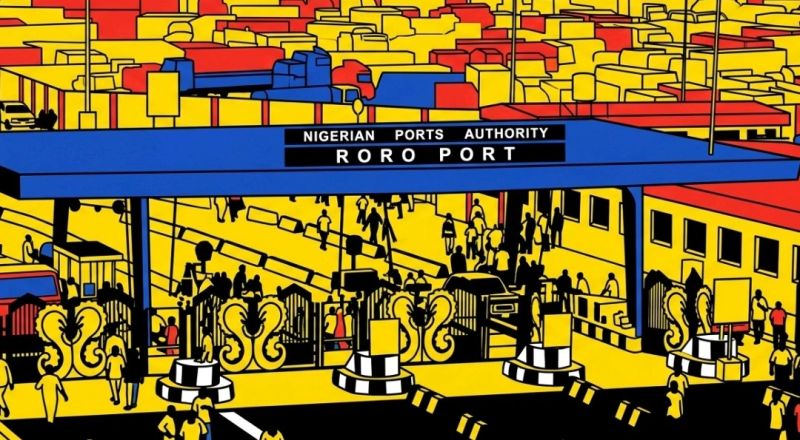
Aluko & Oyebode and TEMPLARS have advised on a £746 million financing facility for the rehabilitation of the Lagos Port Complex at Apapa Quays and Tin Can Island Port Complex, in one of the largest export credit agency-backed infrastructure financings in West Africa in recent years.
The facility, equivalent to approximately $1 billion, was arranged by Citibank, supported by cover from UK Export Finance and reinsurance from KUKE.
Aluko & Oyebode acted as Nigerian legal counsel to Citi and UKEF, with the team co-led by Kofo Dosekun and Oludare Senbore. TEMPLARS advised the Nigerian Ports Authority on the transaction.
The financing is notable not only for its scale, but for what it suggests about the re-emergence of structured international infrastructure capital into Nigeria.
Export credit agencies are re-entering selectively
UKEF’s involvement marks one of its first major infrastructure financings in Nigeria in nearly a decade, a period during which international lenders grew increasingly cautious about exposure to the country amid currency volatility, debt sustainability concerns and regulatory unpredictability.
That caution has not disappeared. What has changed is the structure through which capital is returning.
Export credit-backed facilities allow lenders to participate in strategically important projects while distributing sovereign and repayment risk across institutional frameworks designed to support long-term infrastructure trade. In effect, ECAs are acting as confidence intermediaries between international capital and higher-risk emerging markets.
The structure of this transaction reflects that shift. The inclusion of reinsurance support from KUKE further underscores how multilayered risk mitigation has become central to large-scale infrastructure financing in Africa.
Ports sit at the centre of Nigeria’s economic competitiveness problem
The focus on Lagos port infrastructure is commercially significant.
Apapa and Tin Can Island remain critical gateways for Nigerian trade, yet persistent congestion, ageing infrastructure and operational inefficiencies have imposed substantial economic costs across supply chains for years. Delays at the ports have affected import pricing, export competitiveness and broader industrial productivity.
Rehabilitation of the port complexes therefore carries implications beyond logistics modernisation. It intersects directly with trade facilitation, manufacturing efficiency and Nigeria’s wider ambition to position itself as a regional commercial hub under frameworks such as the African Continental Free Trade Area.
For international lenders, infrastructure tied to trade corridors and logistics efficiency tends to carry stronger strategic rationale than politically exposed prestige projects with uncertain economic returns.
Nigerian firms are increasingly central to sophisticated cross-border financings
The transaction also reflects the continued maturation of Nigeria’s top-tier legal market.
Complex ECA-backed financings require coordination across sovereign entities, international lenders, insurers, export credit agencies and regulatory frameworks spanning multiple jurisdictions. Historically, many of these transactions were led predominantly by international firms, with domestic counsel playing narrower local-law roles.
That balance has evolved.
Leading Nigerian firms are increasingly acting as core strategic advisers on highly structured infrastructure and finance mandates, particularly where local regulatory knowledge and execution capability are critical to transaction delivery.
For firms such as Aluko & Oyebode and TEMPLARS, participation in transactions of this nature reinforces competitive positioning not only within Nigeria, but across the broader African project finance market.
Infrastructure capital is returning, but under stricter conditions
The deeper significance of the financing lies in what it reveals about the future of infrastructure investment into Africa’s largest economy.
International capital has not regained a broad appetite for frontier-market exposure. Instead, financing is returning selectively, prioritising projects with strategic economic value, institutional support and robust risk-allocation structures.
Nigeria’s ability to attract further long-term infrastructure capital may therefore depend less on headline reform narratives and more on whether it can consistently deliver bankable projects with credible governance, stable regulatory frameworks and enforceable institutional protections.
That distinction is likely to define the next phase of infrastructure financing across African markets.
The Meridian tracks capital, infrastructure finance and the strategic forces reshaping African markets.




Leave a Reply